798 Green Vein
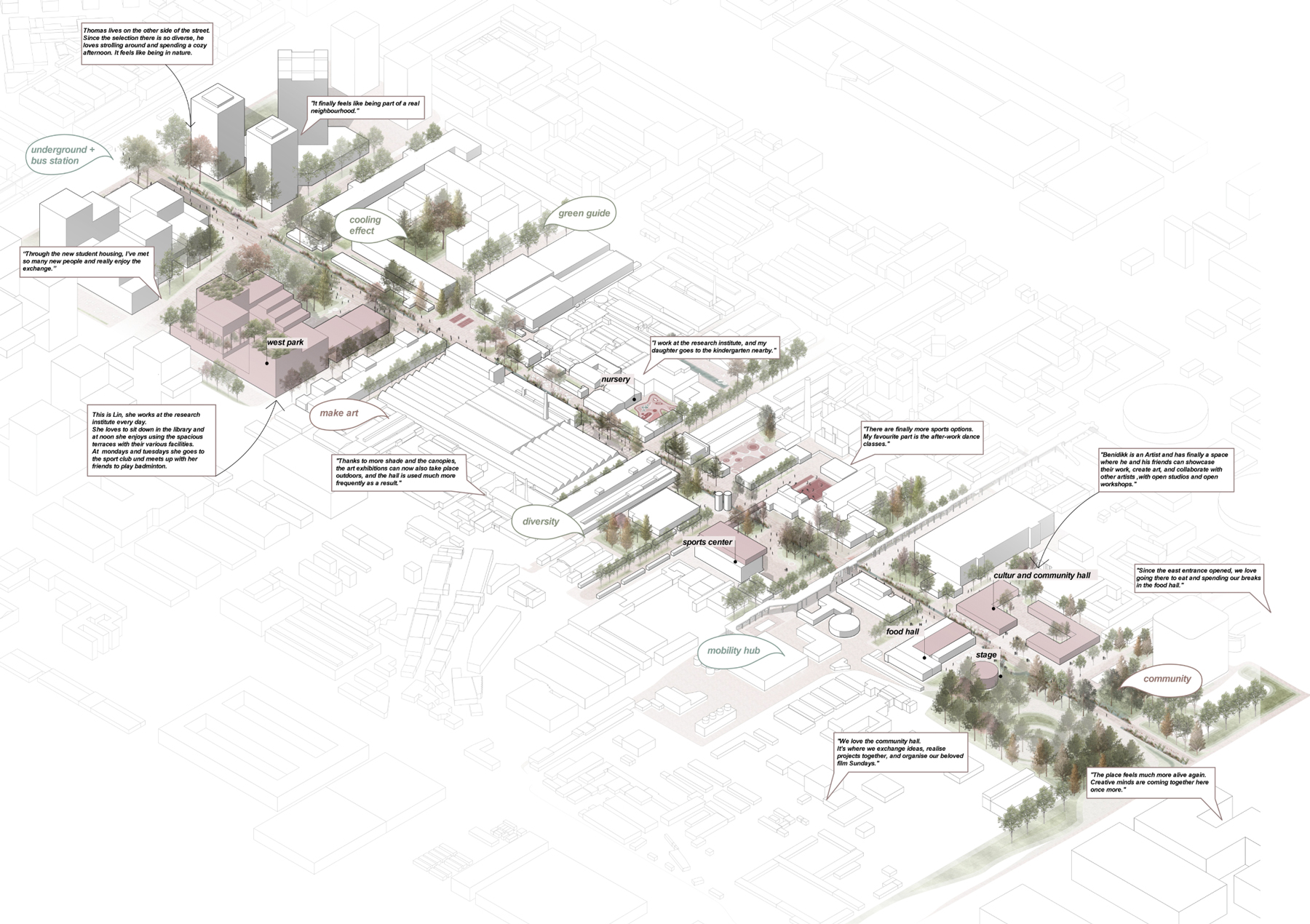
Our project explores the transformation of a central urban axis within a district in Beijing historically shaped by artisanal craftsmanship and productive uses. Rather than preserving this heritage in a nostalgic or museal way, the project aims to reinterpret craftsmanship as an active and contemporary driver of urban life. Through targeted architectural interventions, programmatic reconfiguration, and the integration of green and water systems, the axis is redefined as the spatial and social backbone of the neighborhood.
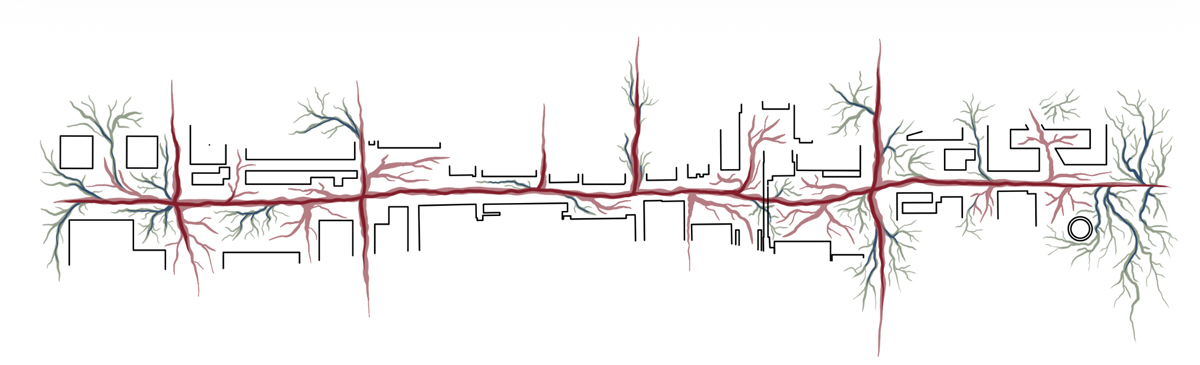
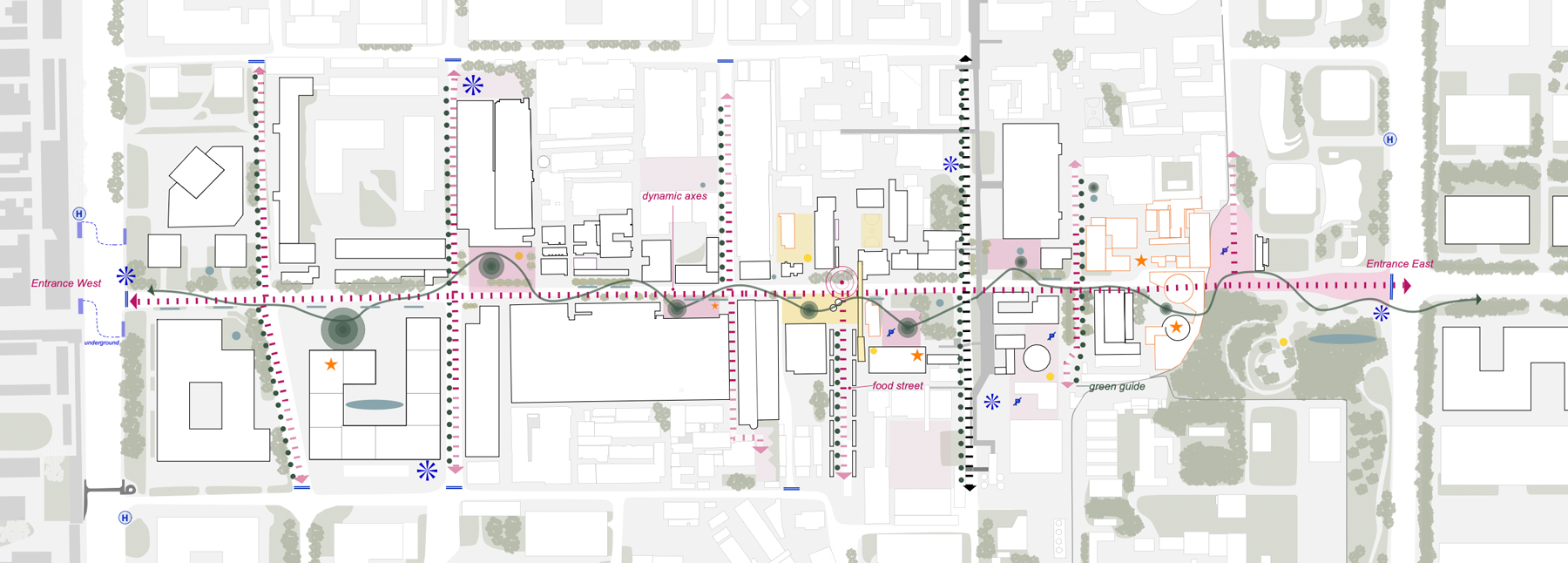
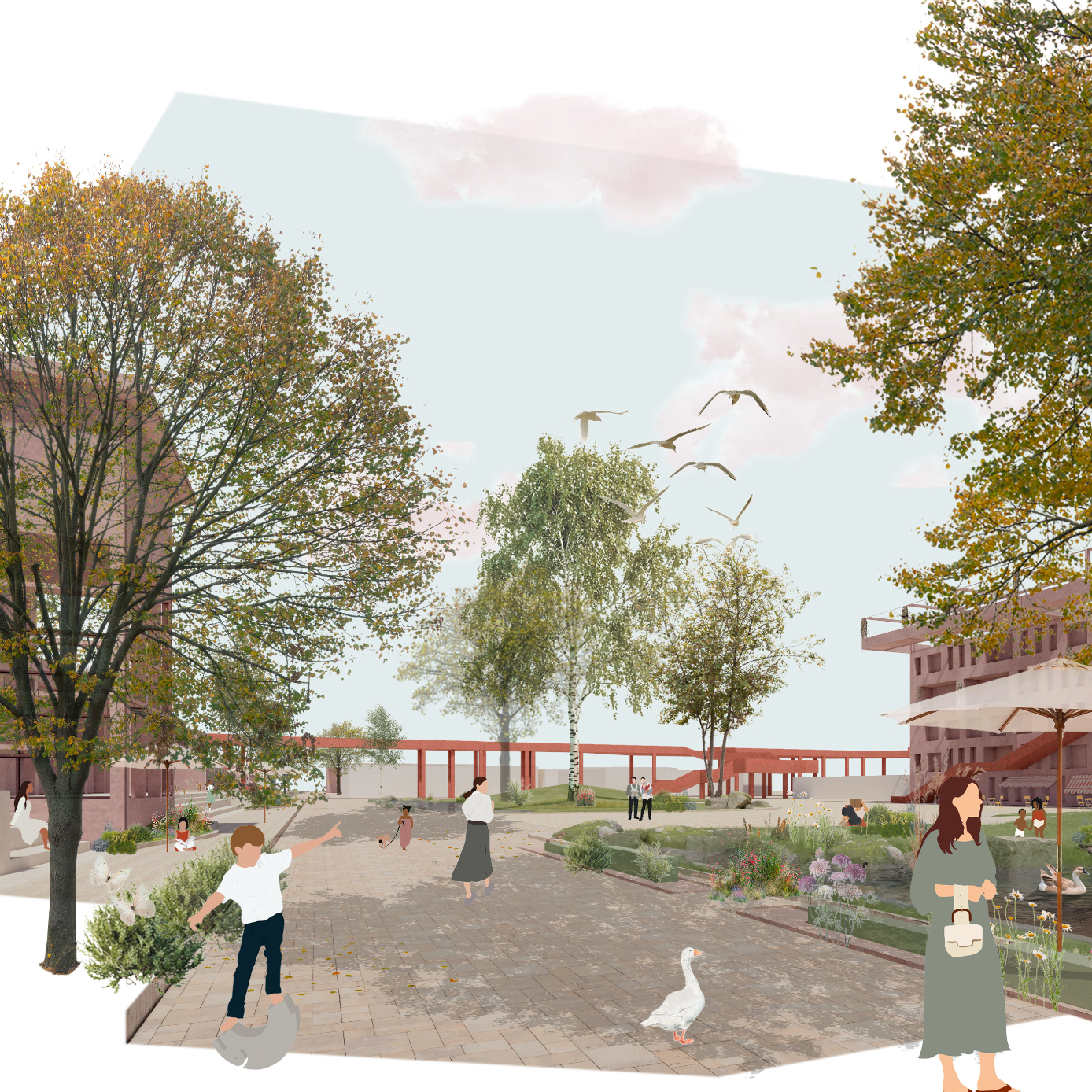
The urban strategy combines large-scale structural interventions with fine-grained, everyday spatial measures. Public squares are upgraded, new communal and productive uses are introduced, and existing buildings are integrated into a continuous public space network. Craft-based and creative programs are deliberately re-embedded within the district, making production visible in the urban fabric and fostering social interaction, exchange, and local identity.
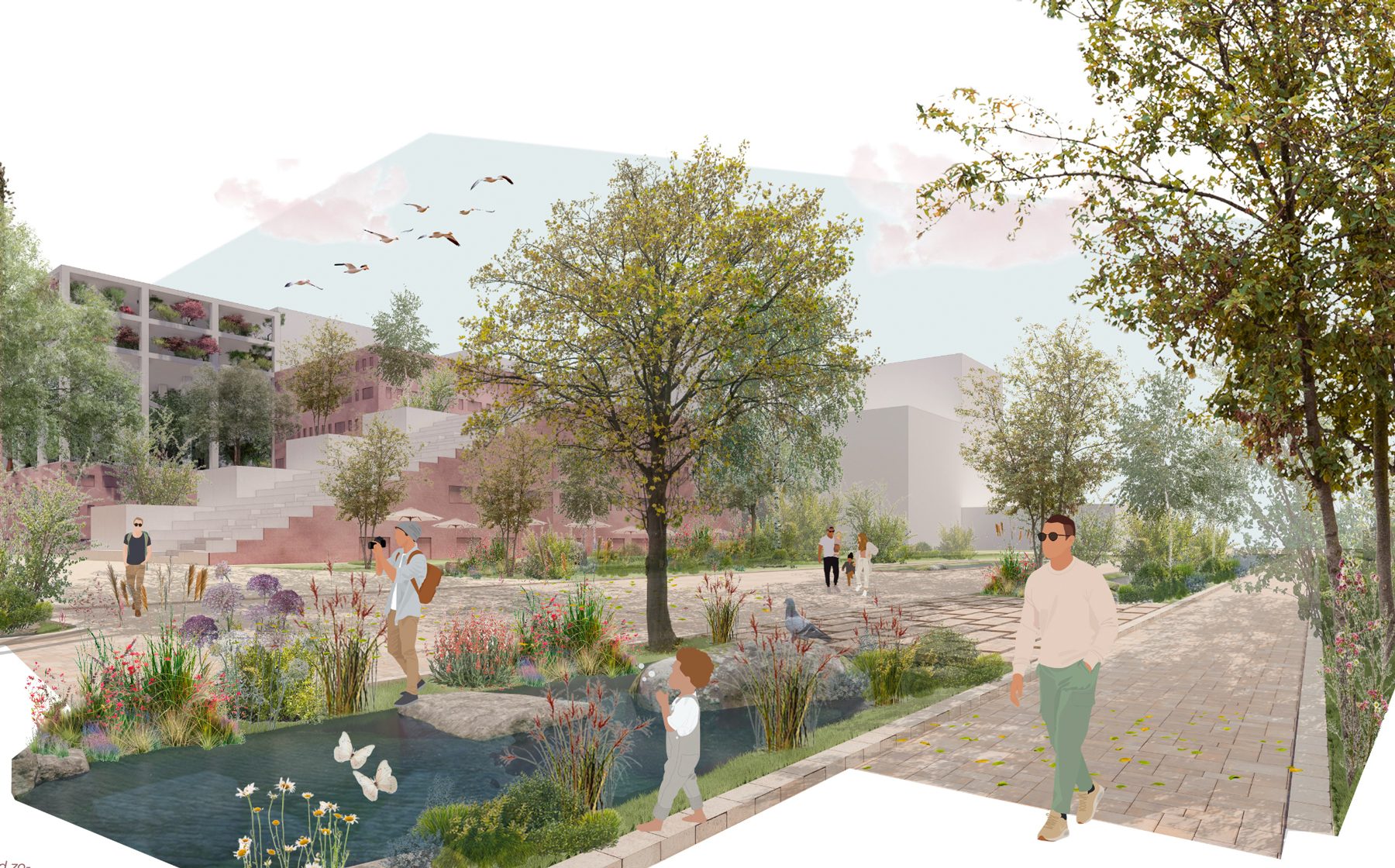
Green and blue infrastructures play a central role in shaping the project. Vegetation and water elements improve microclimatic conditions, enhance biodiversity, and structure the public realm. Water features contribute to cooling effects and spatial orientation, while continuous green spaces create a legible sequence of open spaces along the axis.
Improved pedestrian and cycling connectivity reduces existing barriers and strengthens relationships between formerly fragmented areas. The project understands the urban axis as a space of movement, encounter, and production – one that reconnects with the district’s craft-based heritage while establishing a sustainable, climate-responsive, and socially vibrant urban environment.