TH[RE]E USE
Educational buildings from recent generations have been defined by one thing above all: functionality. Traditional corridor schools consist of narrow hallways lined with identical classrooms, one after another. This simple and cost-effective construction method allowed for efficient development of new schools.
However, the results of the 2022 PISA study mark a low point in the past two decades. Germany is facing an educational crisis that cannot be attributed solely to outdated content or teaching methods. In the healthcare sector, it is well known that environments with ample daylight, natural materials, and calm spatial design support patient recovery. In other words, architecture has a direct impact on users.
This insight has yet to gain similar importance in school construction—despite the fact that children and teenagers often spend more time at school than anywhere else. It is therefore high time to enhance our schools both aesthetically and atmospherically. At the same time, the education system is lagging behind in terms of content: curricula are often outdated, and structural problems like teacher shortages and social inequality only make matters worse.
What we need are high-quality, future-oriented learning spaces that are accessible to all—and that give children and young people the sense that they are truly valued.
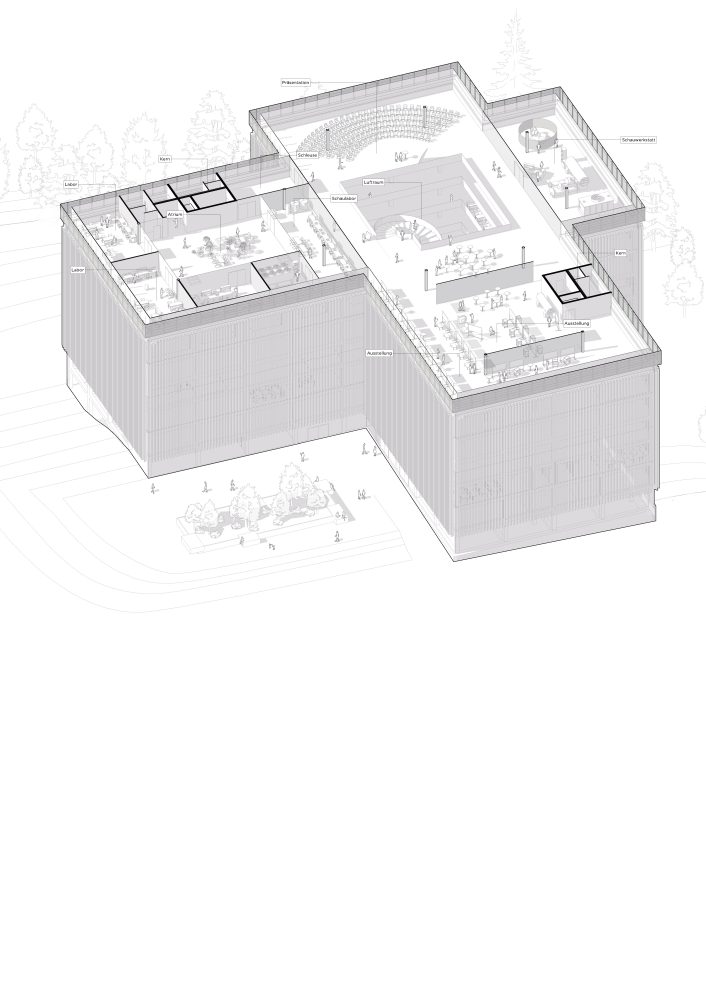
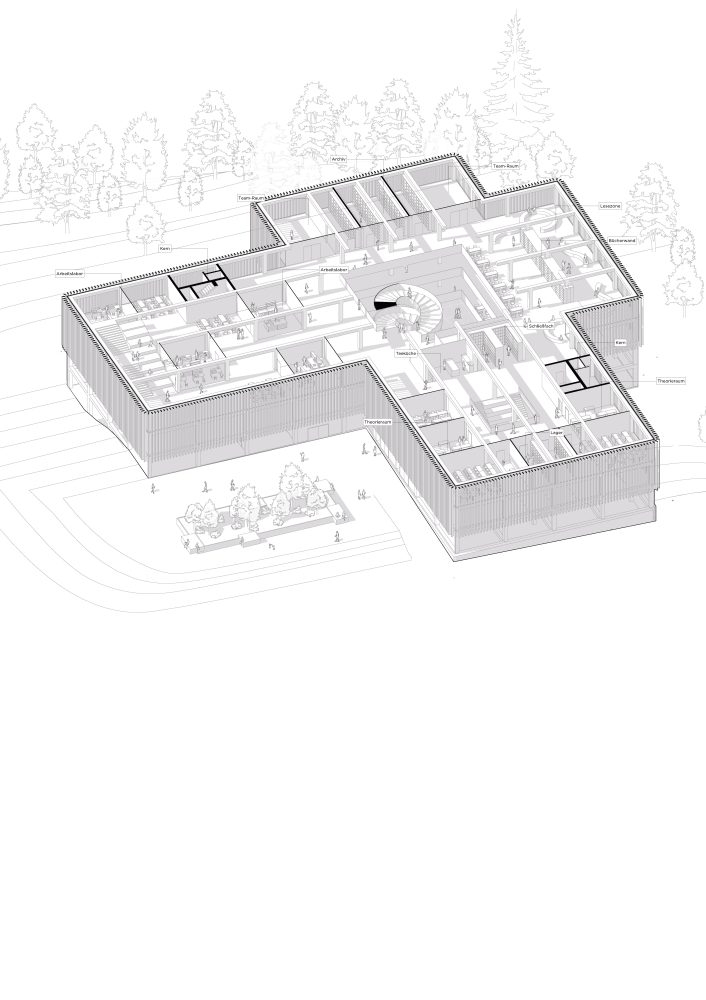
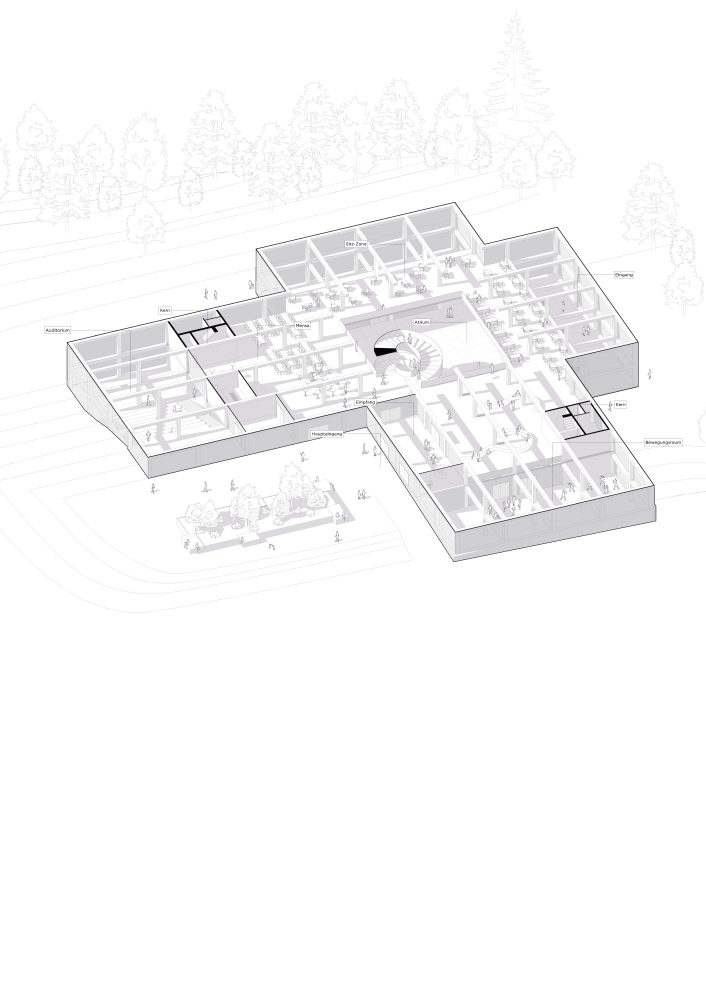
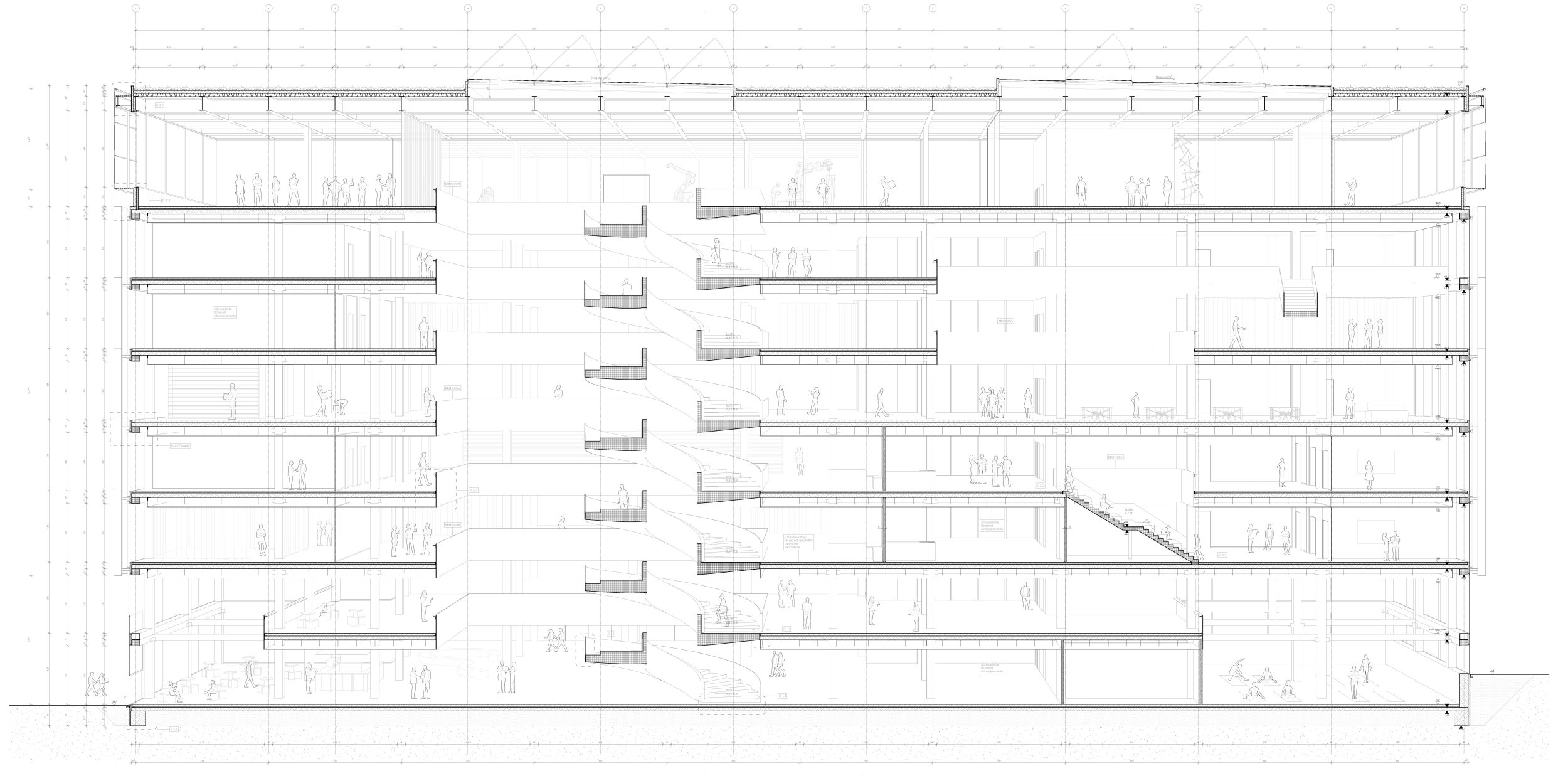
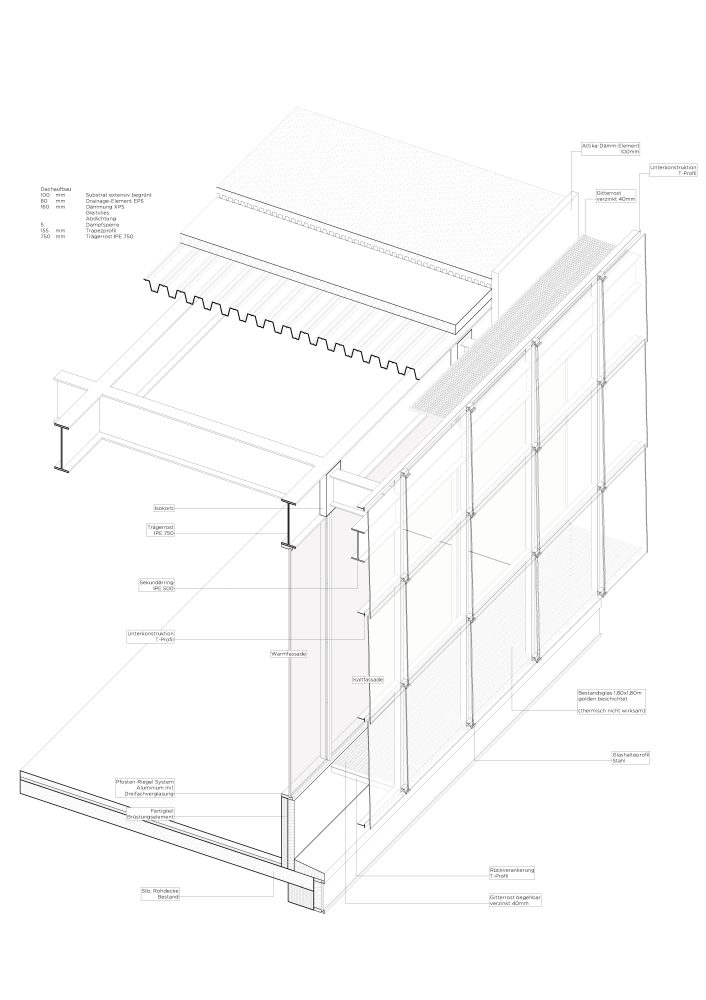
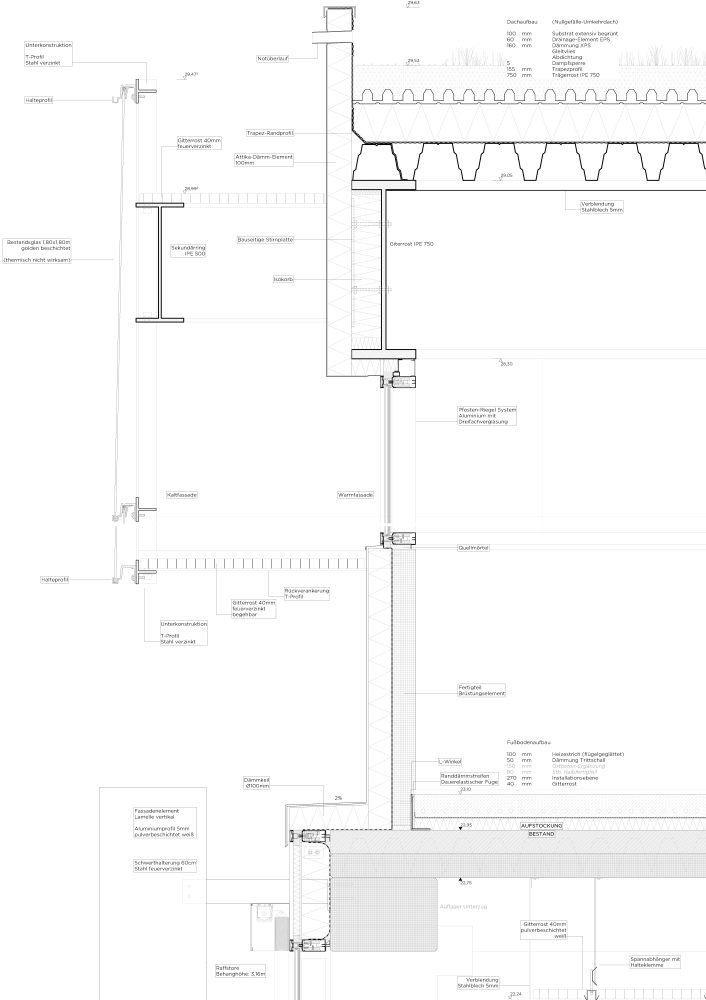
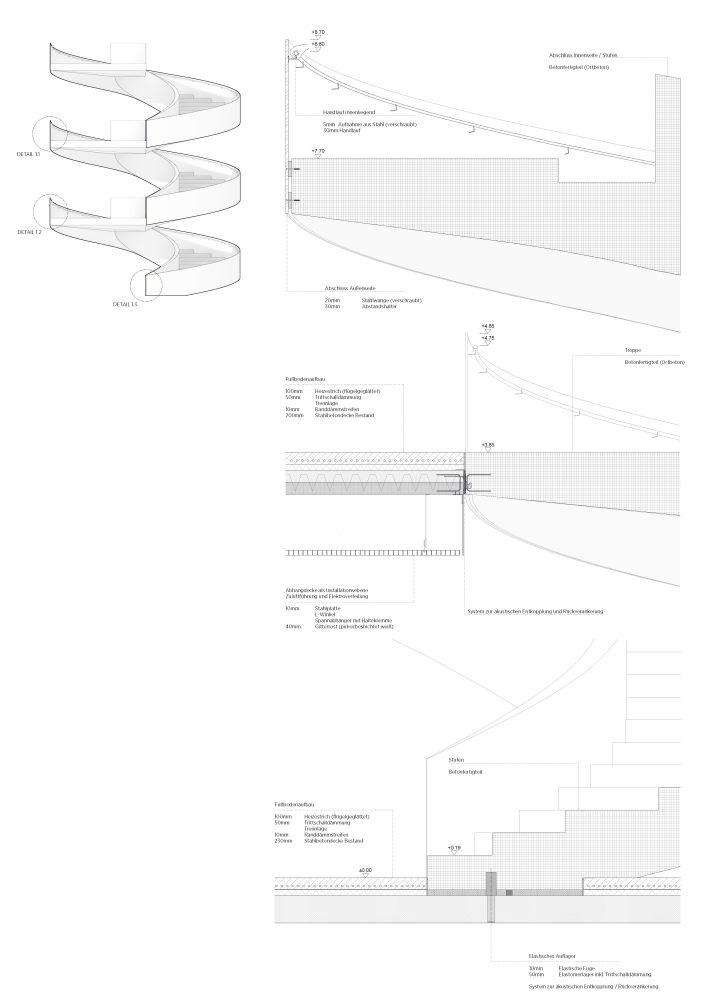
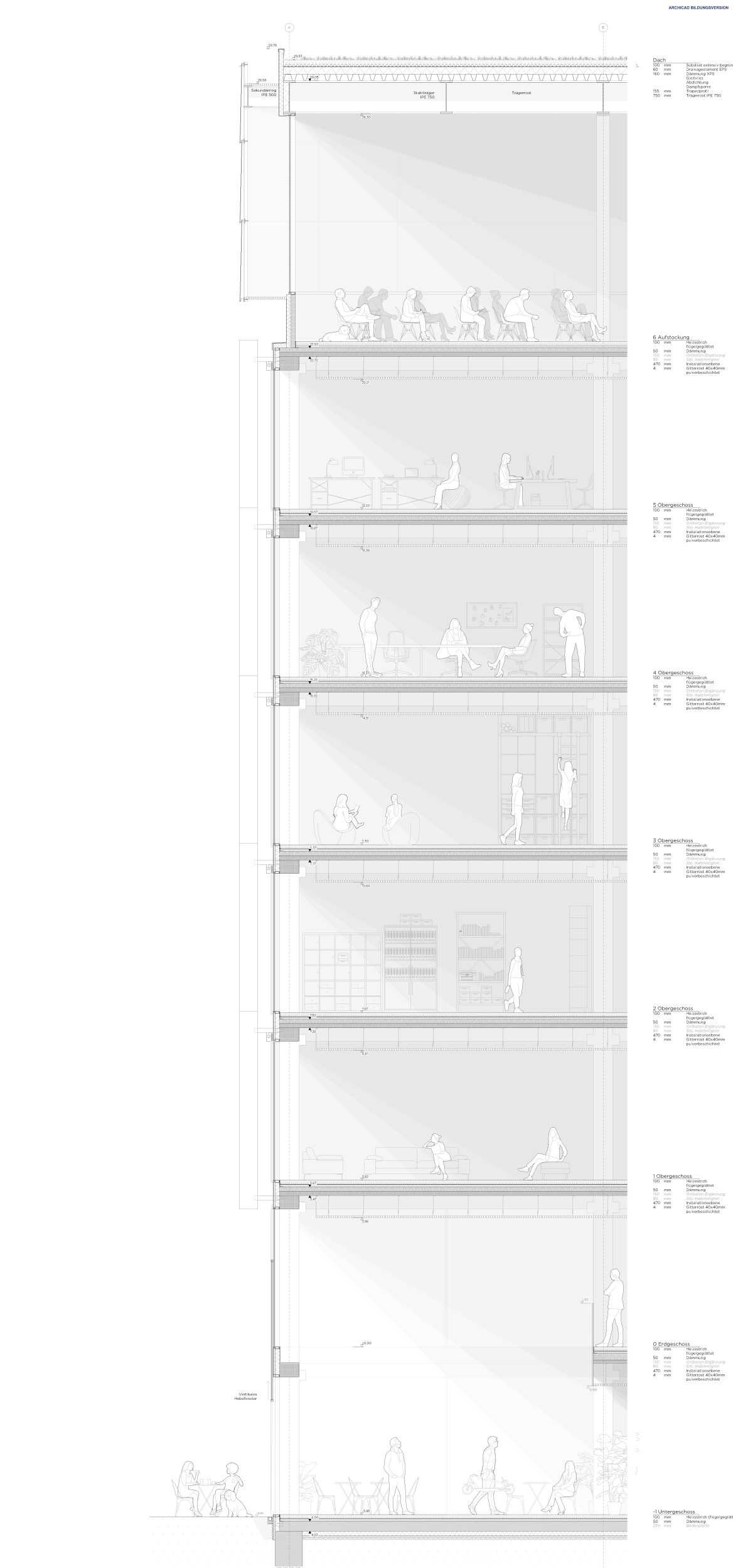
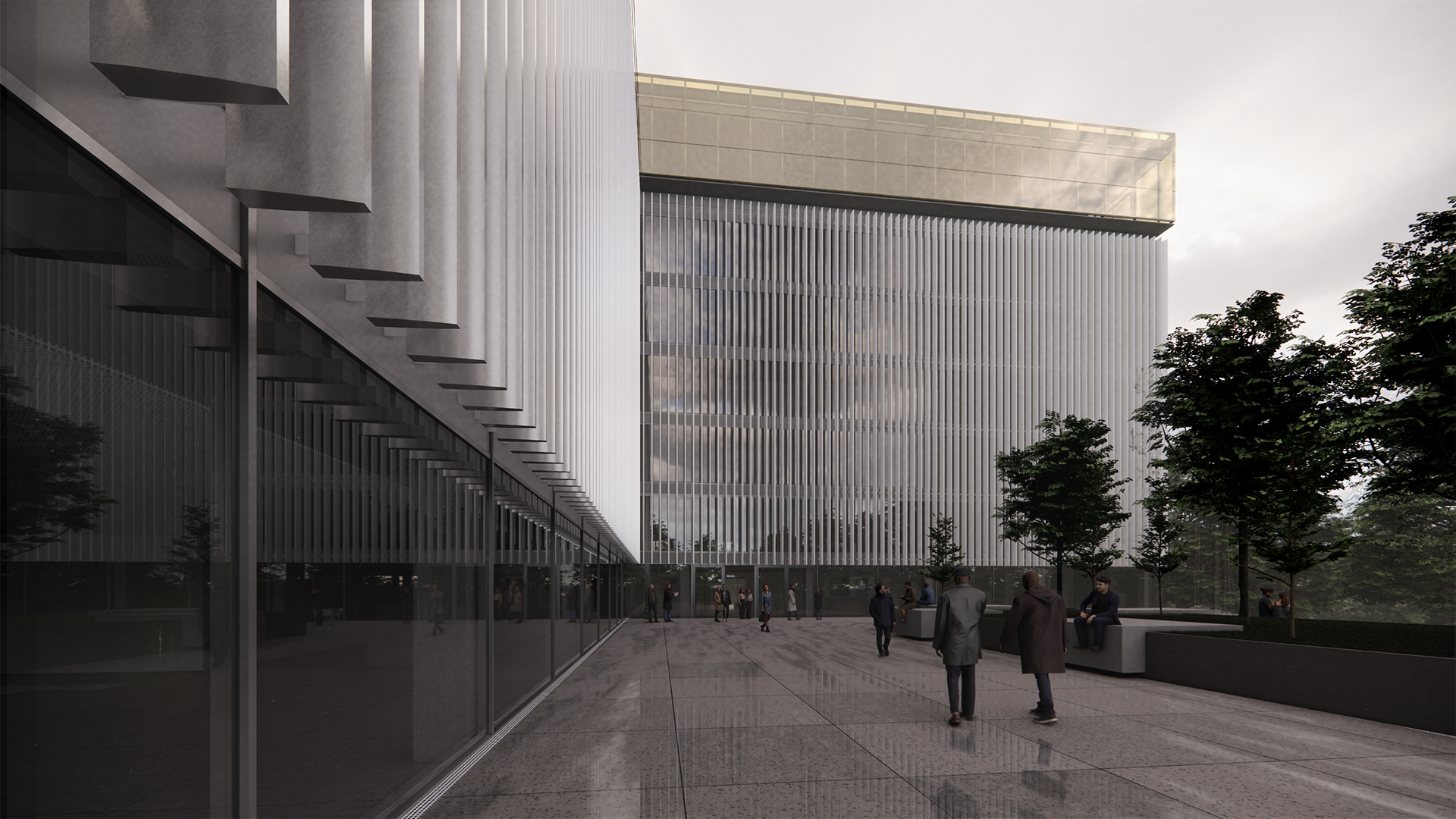
A formerly monofunctional office building is transformed into a three-part educational landscape: public, experimental, and representative. On the ground and basement levels, the cafeteria, café, activity room, and auditorium open up to the neighborhood, inviting public participation. Above that, a diverse learning environment unfolds with departments, workshops, and a »Failure Archive« that showcases failure as a constructive process. Topping it all off is a new addition with professional laboratories and open exhibition spaces. A gold-mirrored façade expresses the value of education as a mindset—and brings that message into the city.