This Time Tomorrow
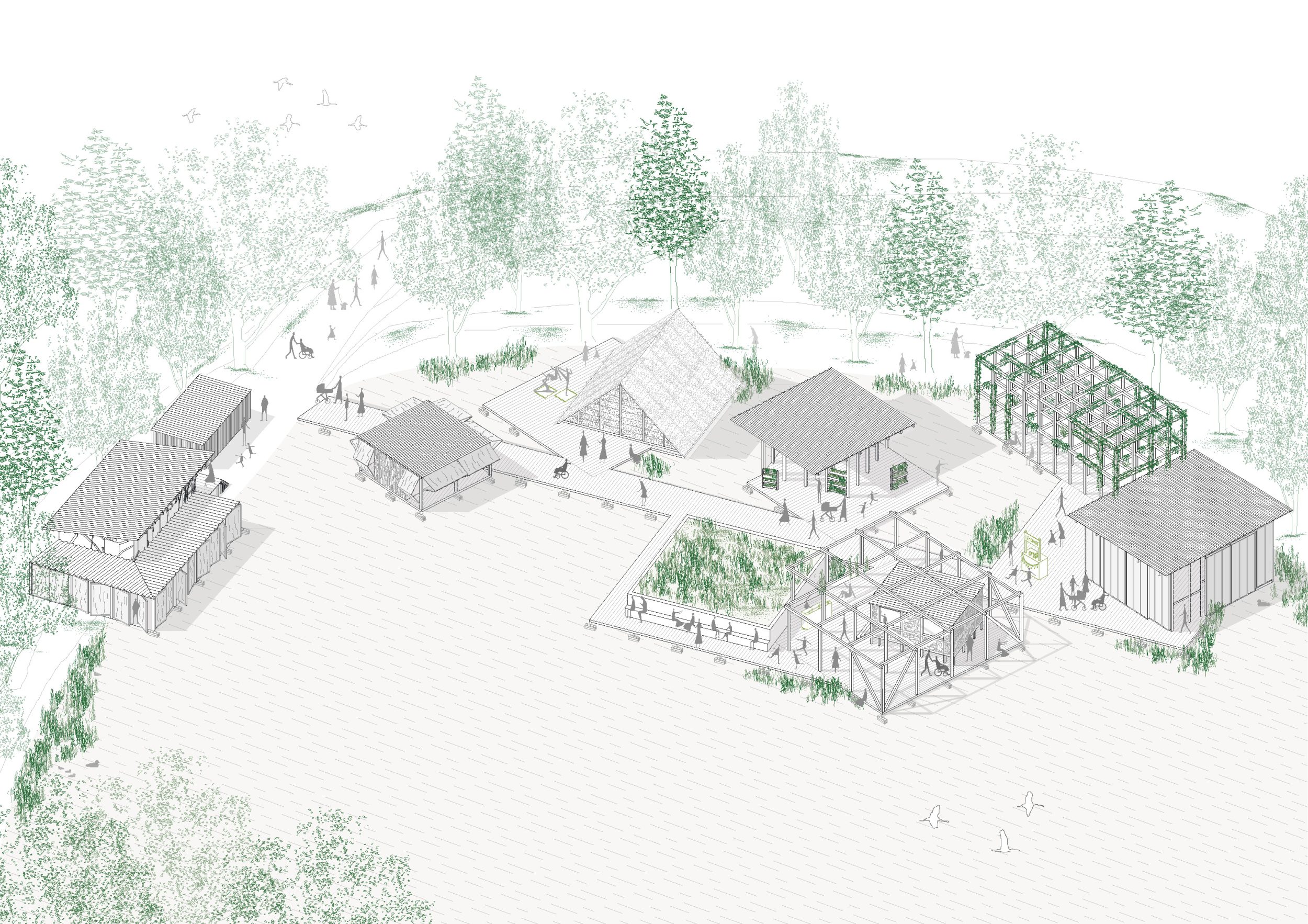
The Floating University is an intercultural meeting place where people can work together on issues of the future. The structure of the learning centre is located in a retention basin next to Tempelhofer Feld.
The design focuses on the resource-saving use of materials and available energy. As the use of sustainable materials is no longer sufficient, the Floating University is looking for renewable methods. The guiding principle of the design was to use as little material as possible and to reduce the energy requirement as much as possible. The starting point for the design is the existing Sports Hall and Urban Forest buildings, from which two grids have been developed. This is crucial for the overall arrangement of the individual pavilions. The overlapping of the two grids creates an interesting setting, with squares spanning between the buildings, some of which extend into the main access axis, thus multicoding the walkway. The spatial programme was first sorted and located according to loud and quiet. Then the uses were pushed into each other like an onion, creating different temperature zones, for example the sauna is located in the retreat and radiates heat into the room.
Der Leitgedanke des Entwurfs war, so wenig Material wie möglich zu verwenden und den Energiebedarf so weit wie möglich zu reduzieren. Ausgangspunkt für den Entwurf sind die bestehenden Gebäude Sporthalle und Urban Forest, aus denen zwei Raster entwickelt wurden. Dies ist entscheidend für die Gesamtanordnung der einzelnen Pavillons. Durch die Überlagerung der beiden Raster entsteht ein interessantes Umfeld mit Plätzen zwischen den Gebäuden, die teilweise in die Haupterschließungsachse hineinreichen und so den Weg vervielfältigen. Das Raumprogramm wurde zunächst nach laut und leise sortiert und verortet. Dann wurden die Nutzungen wie eine Zwiebel ineinander geschoben, so dass unterschiedliche Temperaturzonen entstehen, z.B. befindet sich die Sauna im Rückzugsbereich und strahlt Wärme in den Raum ab.
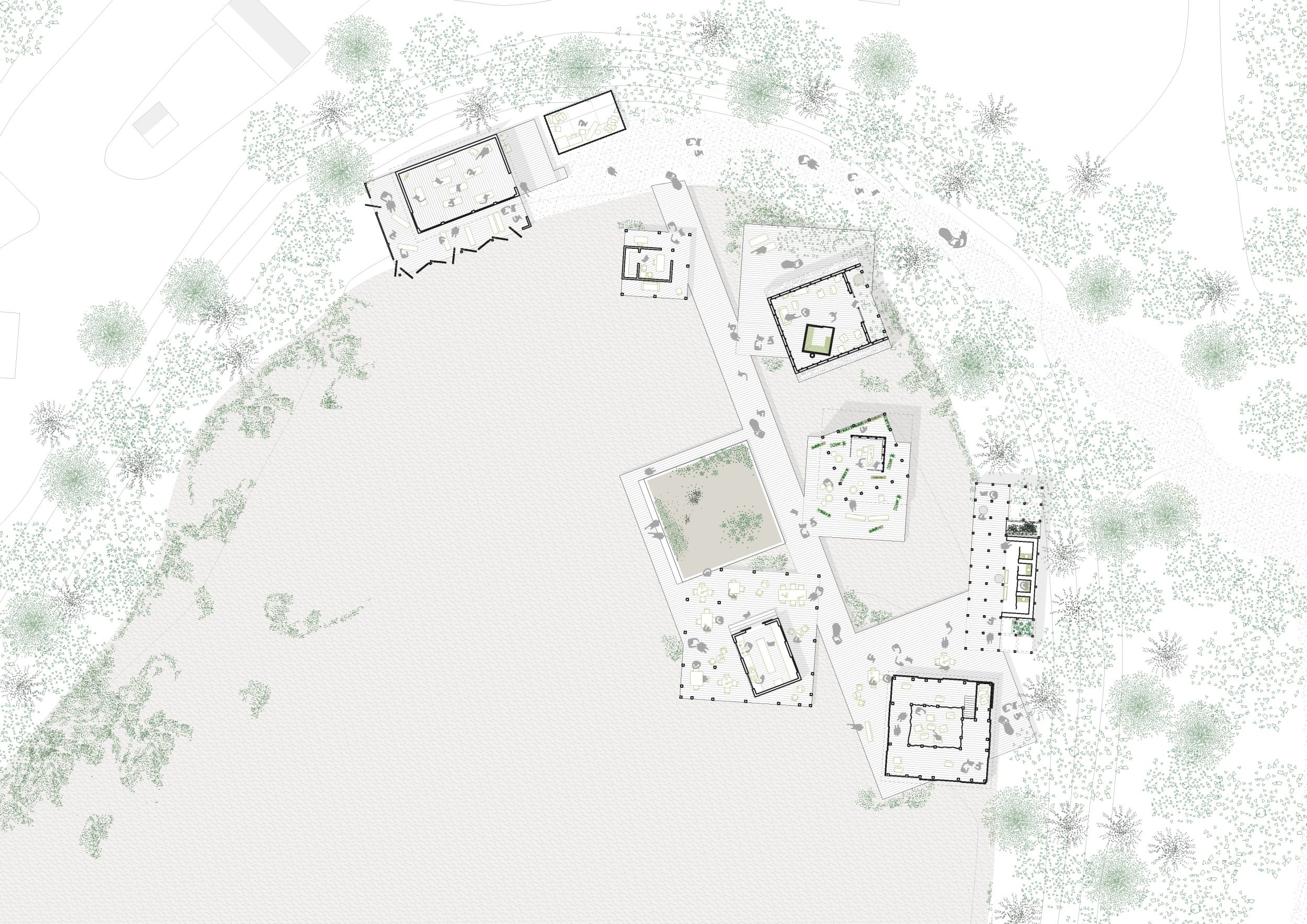
Grundriss M 1:200
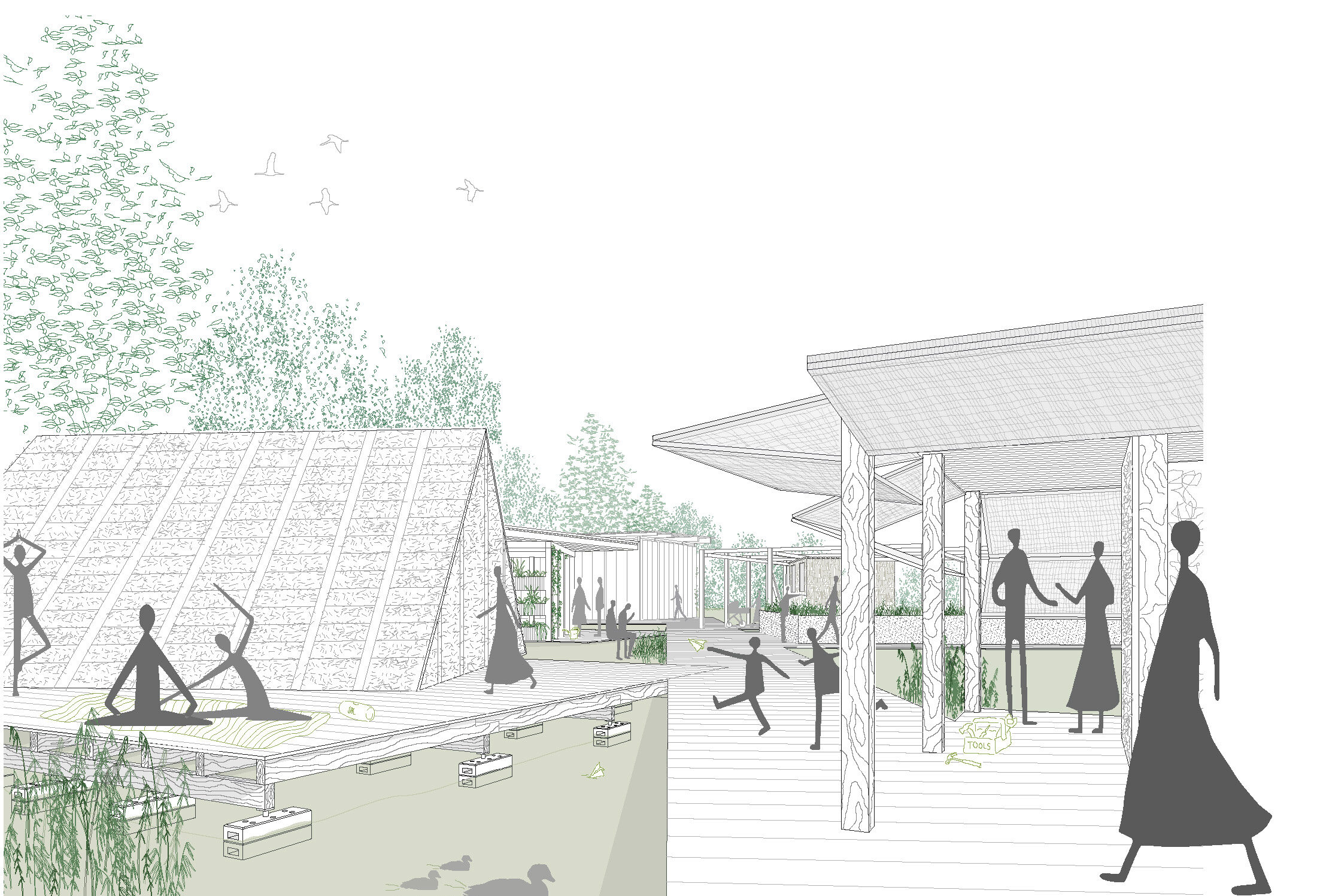
Atmosphärische Darstellung
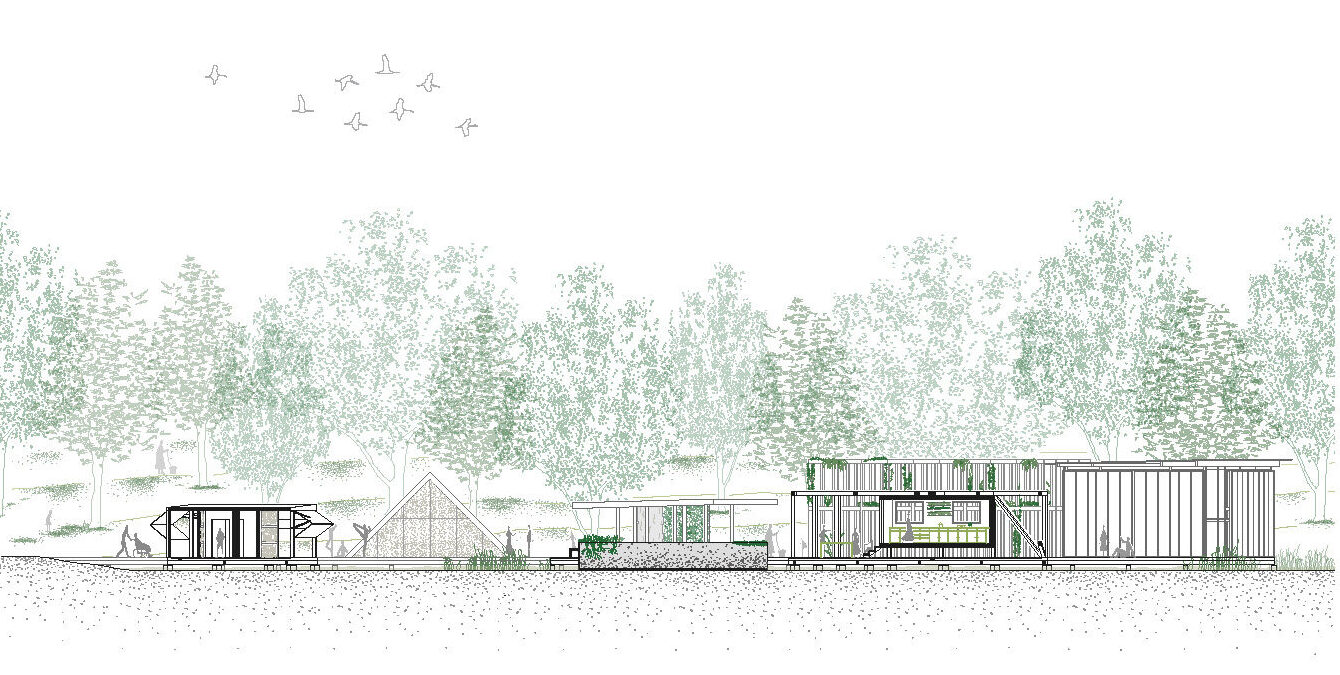
Schnitt M 1:200
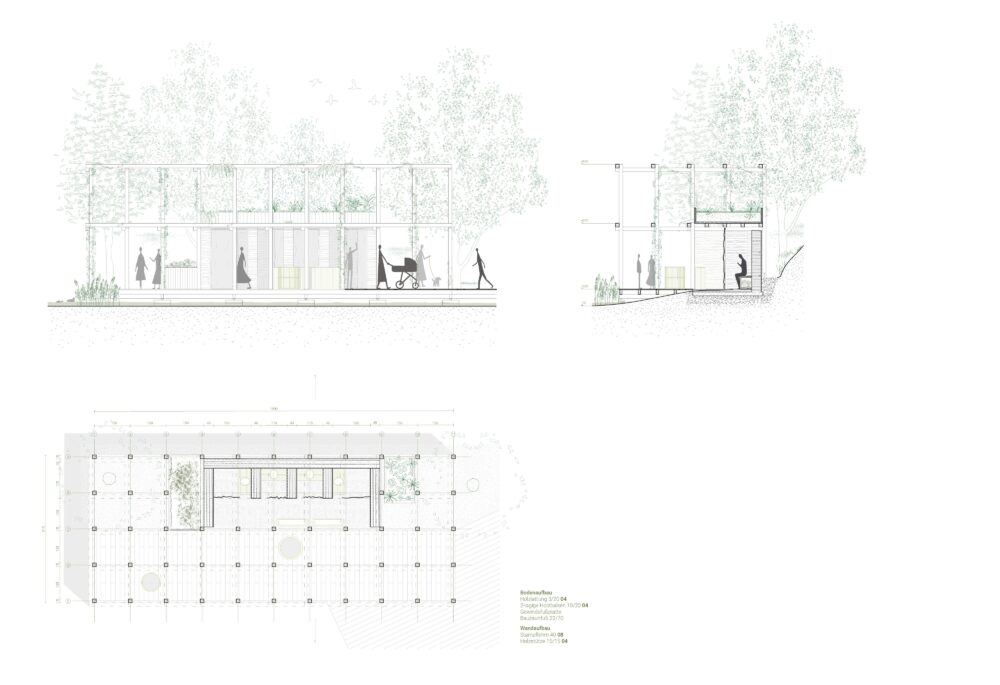
Dreitafelprojektion M 1:50
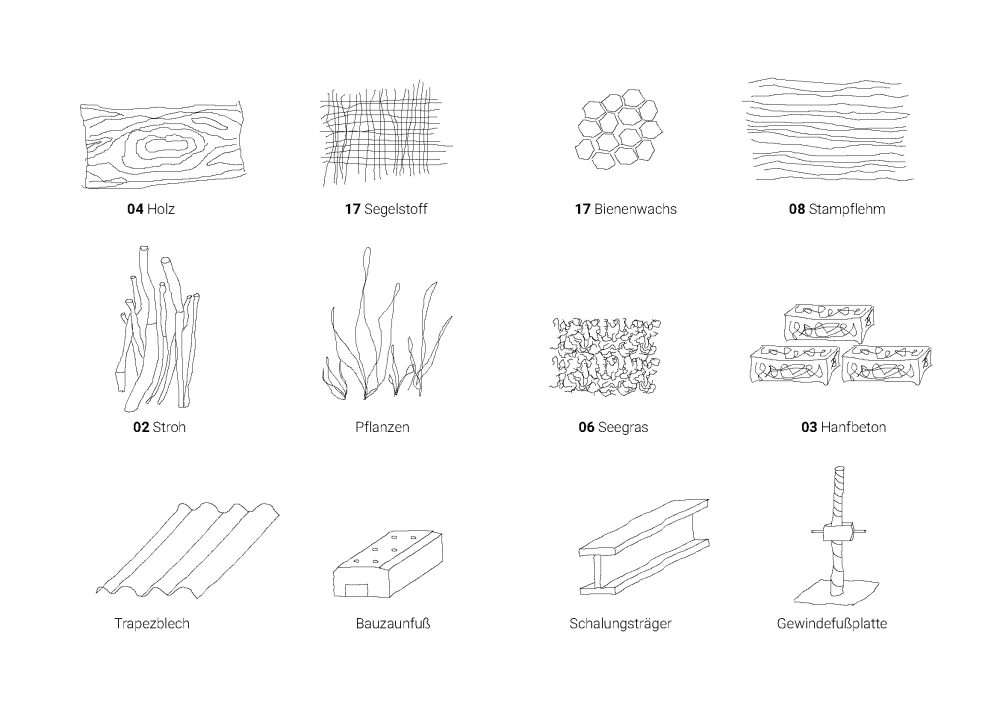
Materialien
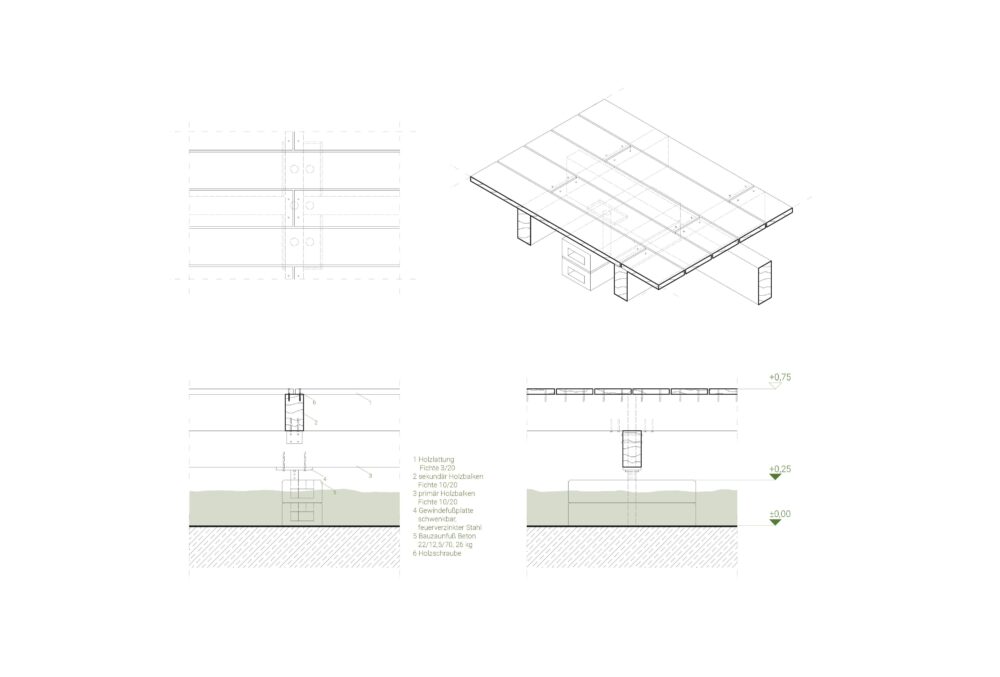
Deatil M 1:5